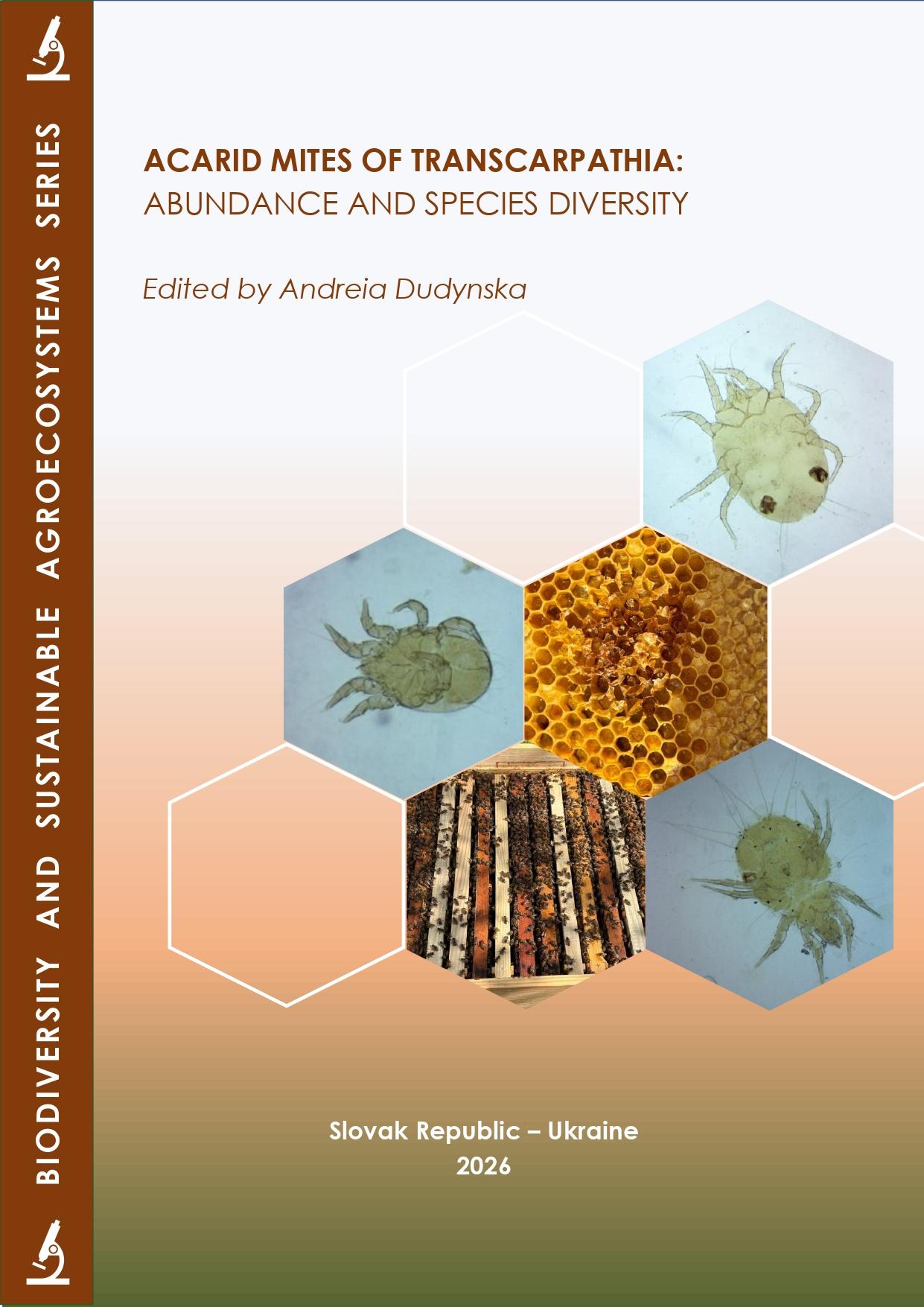
ACARID MITES OF TRANSCARPATHIA:ABUNDANCE AND SPECIES DIVERSITY
Keywords:
acarids, dominant species, mite density, biodiversity indices, apiaries, pest, Apis mellifera, vertical zonality, honeySynopsis
The monograph “Acarid mites of Transcarpathia: abundance and species diversity”presents a comprehensive study of mites inhabiting synanthropic environments in the Transcarpathian region. The research integrates current knowledge on taxonomy, distribution, ecological characteristics, and population dynamics of species belonging to the families Acaridae and Glycyphagidae.
A total of 24 acarid mite species were recorded within the study area. Species richness was found to decrease with increasing altitude, ranging from 24 species in the lowland zone to 17 species in mountainous areas. In contrast, the highest abundance of mites was observed in the foothill zone, indicating more favorable trophic and microclimatic conditions for their development.
Particular attention is given to the analysis of species diversity across different habitats, including farm buildings (haylofts, chicken coops, cowsheds, storage facilities), organic debris from beehives, and surface layers of honey of different botanical origin during storage. These environments were shown to provide optimal conditions for the maintenance and reproduction of synanthropic acarid populations.
Evaluation of ecological indices (Shannon, Margalef, and Menhinick indices) revealed relatively low variability in biodiversity values (Shannon index ranging from 2.43 to 2.82), reflecting the dominance of a limited number of species under conditions of high population density. A strong negative correlation was identified between altitudinal zonation and species richness (r = −0.75), confirming the significant influence of geographical gradients on community structure.
The results indicate that farm buildings act as key habitats facilitating the proliferation of acarid mites due to the availability of organic substrates and favorable microclimatic conditions. Climatic factors such as temperature and precipitation exhibited only a weak influence on population abundance.
In apiary environments, mite infestation levels were closely associated with the strength of bee colonies, with the highest infestation rates recorded in weak and very weak colonies. Mites were detected exclusively in the surface layer of honey (1–10 mm), and their abundance was strongly influenced by moisture content, botanical origin, and storage duration. Elevated moisture levels in “spring” honey and prolonged storage were identified as the primary factors promoting the development of Carpoglyphus lactis.
The findings contribute to a deeper understanding of acarid biodiversity in the Carpathian region and provide a scientific basis for further acarological, ecological, and applied studies, particularly in the context of pest control in agricultural and apicultural systems.