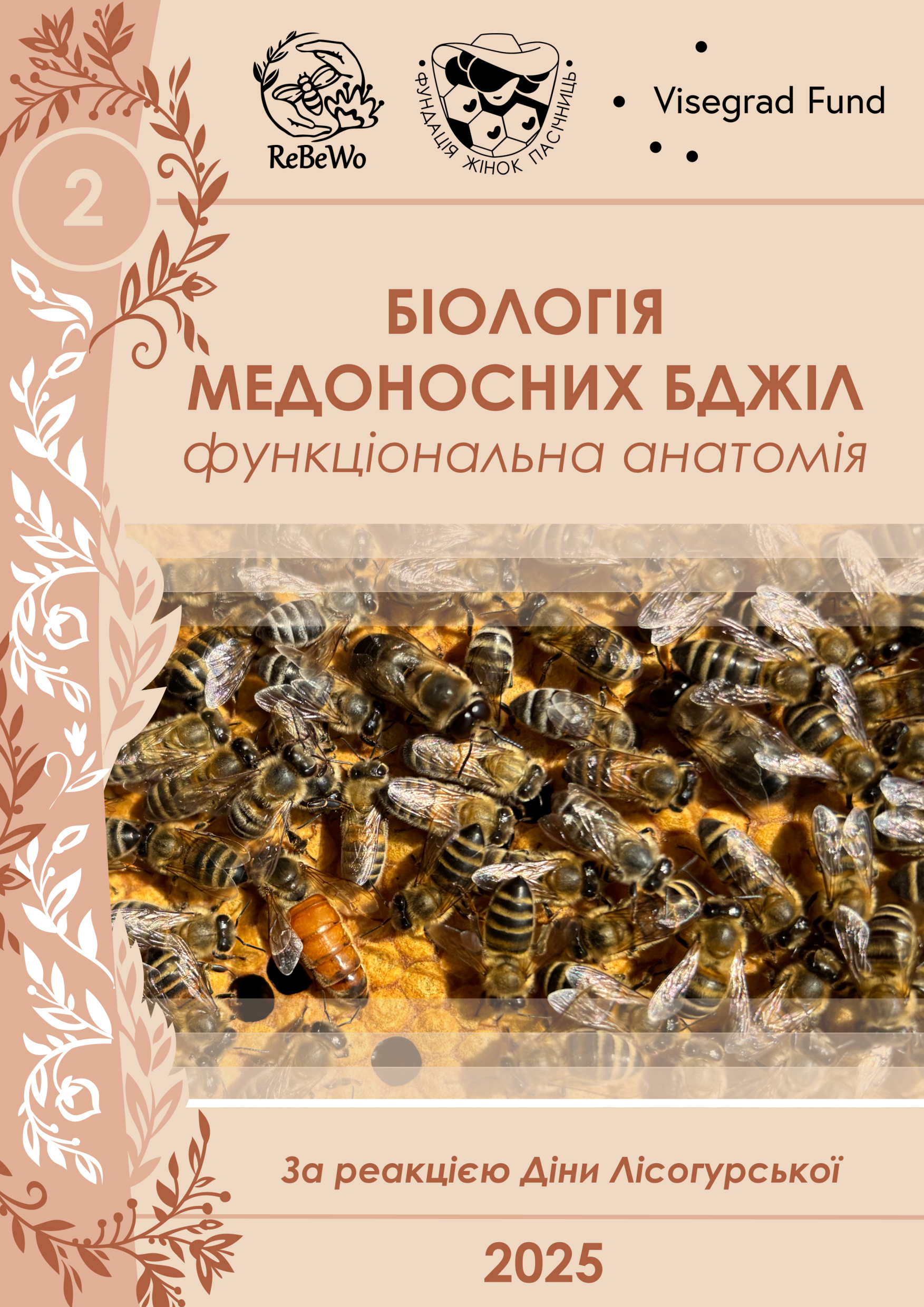
BIOLOGY OF HONEY BEES: Functional Anatomy. PART II
Keywords:
Apis mellifera, honey bee, internal body structure, anatomy, physiology, biological characteristicsSynopsis
The textbook “Biology of the Honey Bee: Functional Anatomy (Part II)” is a logical continuation of the first part devoted to the functional morphology of Apis mellifera L. It covers the structure and functioning of the internal organs of the honey bee, presenting the material in a scientifically consistent and accessible manner. The content is based on modern achievements in insect anatomy, physiology, and ethology, which makes it possible to comprehensively reveal the patterns of life activity within the bee colony.
The textbook systematizes knowledge about the anatomical organization of the main internal systems digestive, respiratory, circulatory, excretory, nervous, sensory, and reproductive. Their structure, interconnections, and functions are described in detail, explaining how they maintain homeostasis, energy metabolism, and the ability of bees to perform active work. It demonstrates how the coordinated functioning of organs contributes to adaptation to environmental changes, the performance of social roles, and the maintenance of colony stability.
Special attention is paid to the sensory organs, which play a leading role in perceiving environmental stimuli, orientation, communication, and regulation of behavioral responses. The anatomical features of the organs of vision, smell, taste, touch, and hearing are presented, as well as the mechanisms of perceiving temperature, humidity, and carbon dioxide concentration. The interrelation between the morphological structure of receptors and their functional specialization is traced, forming the complex sensory system of the honey bee.
The material is accompanied by numerous illustrations and explanations of physiological processes occurring within the internal organs that determine the vital functions of both the individual bee and the entire colony.
The publication has both theoretical and practical significance. It provides a holistic understanding of the structure and functions of the honey bee organism, reveals the relationship between structure and function, and enhances comprehension of the role of physiological systems in behavior, development, and productivity. The textbook can be used as both an educational and reference resource for students, teachers, researchers, postgraduate students, and practicing beekeepers who seek to deepen their knowledge of the biological foundations of honey bee life.
The textbook is intended for participants of a pilot educational program aimed at restoring beekeeping in war-affected regions of Ukraine, as well as for students specializing in H2 “Animal Science” and H6 “Veterinary Medicine.” Through the balanced combination of theoretical concepts and practical recommendations, the textbook serves as an effective educational tool for developing professional competencies and promoting the implementation of sustainable technologies in beekeeping.