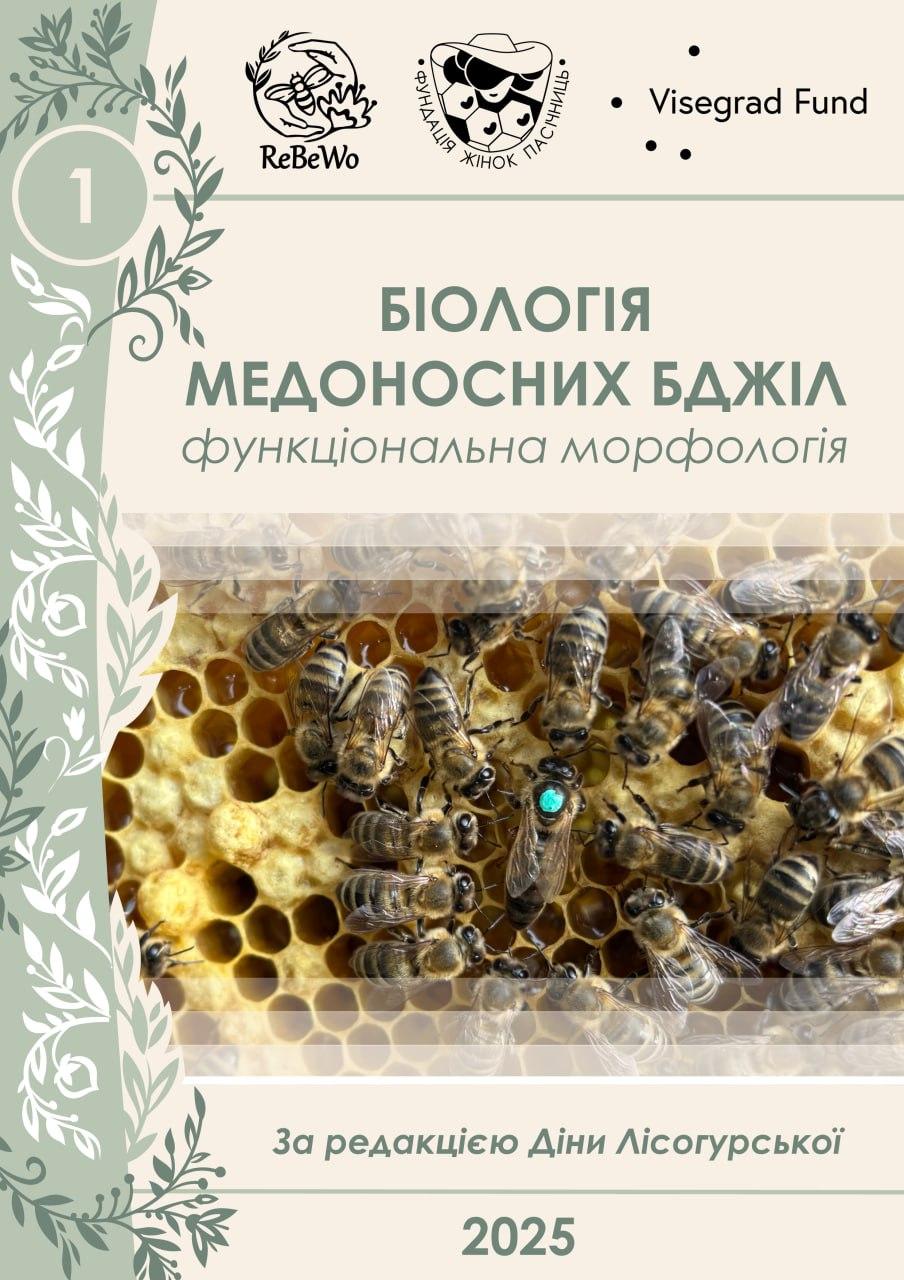
BIOLOGY OF HONEY BEES: Functional Morphology. PART I
Keywords:
Apis mellifera, honey bee, external body structure, morphology, physiology, biological characteristicsSynopsis
The textbook “Biology of the Honey Bee: Functional Morphology (Part I)” is an educational publication that consistently presents material on the functional morphology of Apis mellifera L. The book provides a systematic description of the main structural parts of the honey bee’s body – the head, thorax, and abdomen – which together form an integral morpho-functional system.
Particular attention is given to the body coverings, the structure of the cuticle, and the various types of hairs that play an important role in thermoregulation, protection, perception of external stimuli, and pollination processes. The material is presented with consideration of the anatomical and physiological features of bee morphology, which determine its ability to perform biological functions effectively within the bee colony.
The section devoted to the bee’s head provides a detailed examination of the chewing–lapping mouthparts, including the structure of the upper and lower lips, tongue, jaws, and pharynx, which enable nectar and water intake and participate in wax production. The morphological differences among the queen, drone, and worker bees – especially in the structure of the head, mandibles, and antennae – are highlighted, reflecting their functional specialization.
The thoracic section describes its three segments – prothorax, mesothorax, and metathorax – with the attached legs and wings. It includes a characterization of the limbs and their specialization: pollen baskets, brushes, and spurs adapted for collecting pollen, nectar, and propolis, as well as for body cleaning. The structure and venation of the wings, the coupling mechanism, and the features of flight muscles are discussed, explaining the efficiency of bee flight.
The chapter on the abdomen describes its segmentation, wax mirrors, and sting apparatus. The phenomenon of sexual dimorphism is revealed – morphological and functional differences between females and males resulting from their distinct biological roles in the colony. A comparative description of the external features of the queen, drone, and worker bee is provided to illustrate the structural integrity of the bee family.
The textbook is accompanied by illustrations and self-assessment questions that facilitate better comprehension of the material. The publication has both theoretical and practical significance: it provides a systemic understanding of the morphological organization of the honey bee, the interrelation between organ structure and function, and the adaptations to environmental conditions.
The textbook is intended for participants of a pilot educational program aimed at restoring beekeeping in war-affected regions of Ukraine, as well as for students specializing in H2 “Animal Science” and H6 “Veterinary Medicine.” Through a balanced combination of theoretical concepts and practical recommendations, the textbook serves as an effective learning tool for developing professional competencies and promoting the implementation of sustainable technologies in beekeeping.