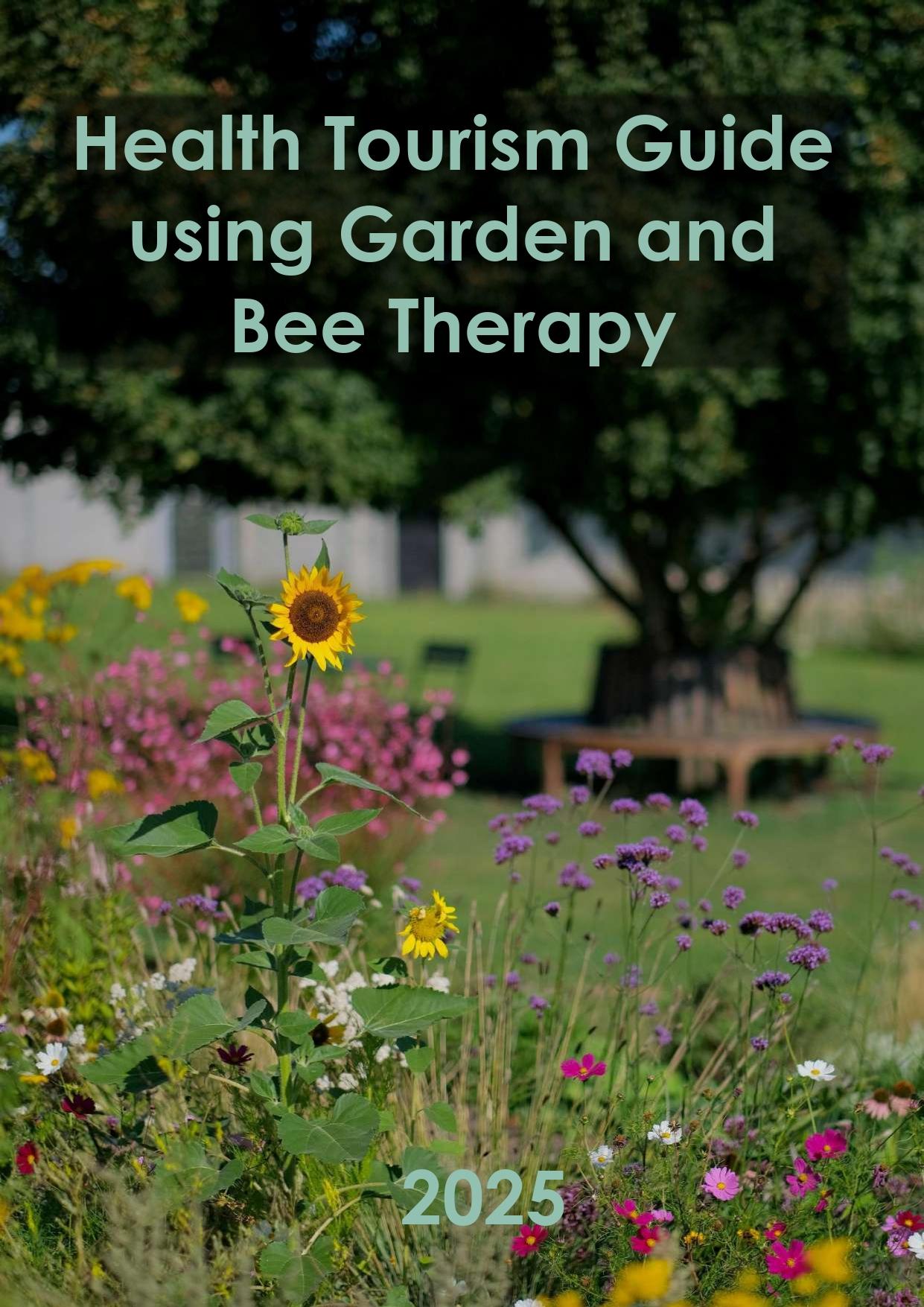
Health Tourism Guideusing Garden and Bee Therapy
Ключові слова:
Health tourism, Garden therapy, Apitherapy, Biodiversity, Ecological gardening, One HealthКороткий опис
The Health Tourism Guide using Garden and Bee Therapy explores the integration of ecological gardening, therapeutic landscapes, and apitherapeutic practices into the broader framework of sustainable health tourism. Drawing on contemporary scientific research and practical case studies, the book demonstrates how biodiversity functions not only as the foundation of ecological resilience but also as a source of physical, psychological, and social well-being.
The text emphasizes the principles of ecological gardening – such as the use of native plant species, mosaic habitat structures, soil life preservation, water elements, shelters, and ecological corridors – as proven strategies for enhancing biodiversity and improving human psycho-emotional health. Therapeutic gardens are presented as “living laboratories of natural balance,” where harmony between humans and the environment is restored through observation, interaction, and care.
Adaptive management and continuous monitoring are highlighted as essential components of long-term ecosystem stability. Tools such as the Garden Biodiversity Index (GBI) and citizen science platforms (iNaturalist, Global Pollinator Watch, eBird, PollinatorWatch) are introduced as innovative methods for quantitative assessment and public engagement. These approaches transform garden care into both a therapeutic practice and a form of civic participation, fostering ecological awareness and social cohesion.
Special attention is given to the role of ecological connectivity, where gardens act as “green bridges” or “ecological stepping stones” linking fragmented habitats. This connectivity supports pollinator migration, bird movement, and genetic diversity, while simultaneously enriching the sensory and therapeutic environment for visitors. The book situates these practices within the *One Health* framework, underscoring biodiversity as an integrative link between human, animal, and environmental health.
Ultimately, the guide positions garden and bee therapy as promising directions in health tourism, combining ecological, social, and spiritual dimensions of human well-being. By merging scientific monitoring, adaptive management, and public participation, therapeutic gardens evolve into dynamic ecosystems that provide ecological stability, cultural value, and restorative experiences. This synthesis offers a pathway toward sustainable development, ecological consciousness, and holistic health promotion.