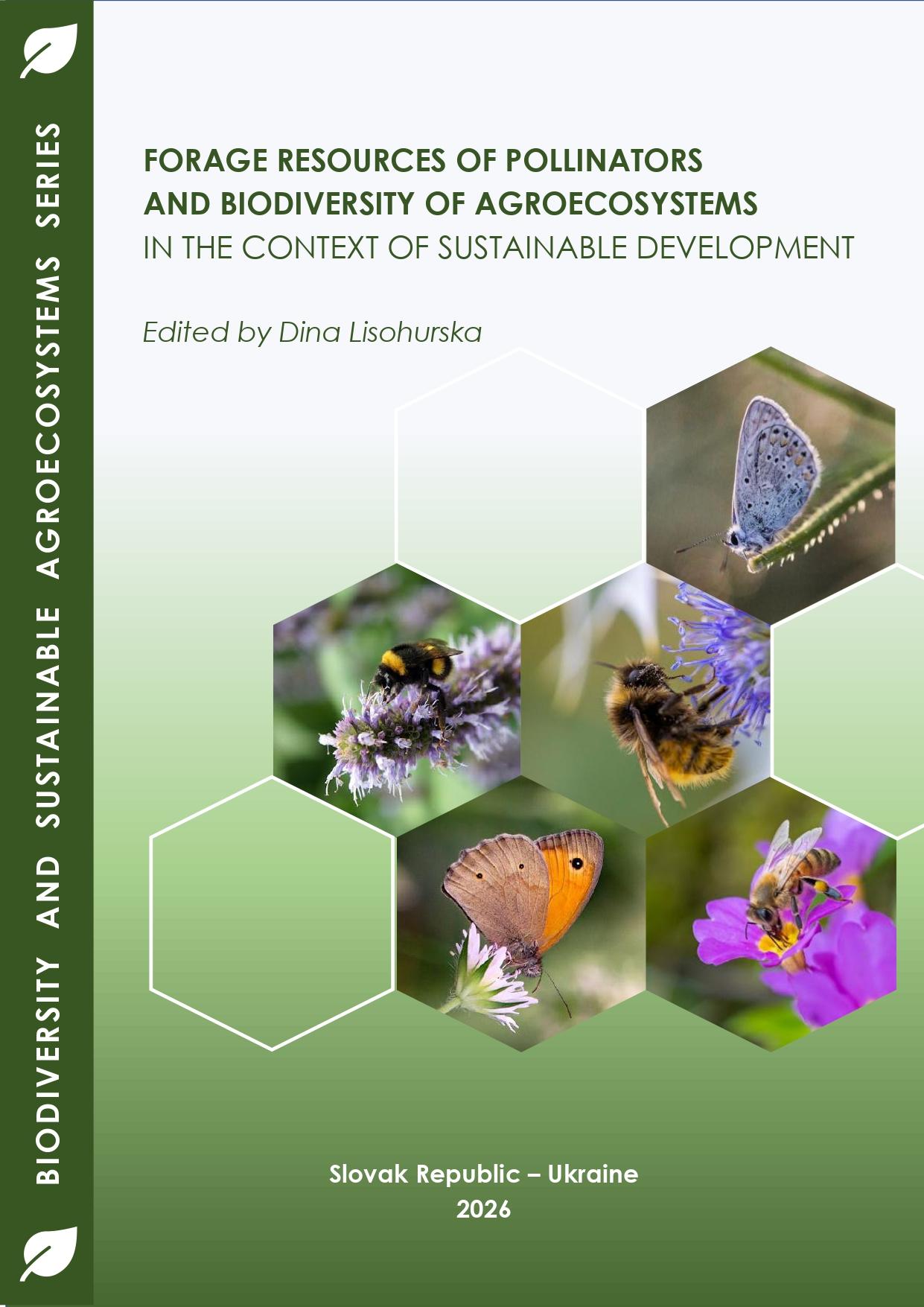
FORAGE RESOURCES OF POLLINATORS AND BIODIVERSITY OF AGROECOSYSTEMS IN THE CONTEXT OF SUSTAINABLE DEVELOPMENT
Keywords:
pollinators, forage resources, biodiversity, agroecosystems, land use, global change, ecosystem services, sustainable development, agroecology, food securitySynopsis
The monograph “Forage Resources of Pollinators and Biodiversity of Agrocenoses in the Context of Sustainable Development” is devoted to a comprehensive study of pollinator forage resources and the biodiversity of agrocenoses within the framework of sustainable development and global land-use transformations. The work synthesizes contemporary scientific approaches to assessing the role of pollinators in the functioning of agri-food systems and substantiates their importance as a key element of ecosystem services and food security. It analyzes global, European, and national trends in changes in land-use structure that determine the availability and quality of the pollinator forage base.
Particular attention is paid to investigating the causes of pollinator decline and biodiversity loss, including agricultural intensification, reduction in floral resource diversity, disruption of phenological synchrony between plants and pollinators, and the impacts of climate change. It has been established that land-use transformations lead to the formation of “forage gaps,” which negatively affect the viability of bee colonies and the efficiency of pollination processes.
The monograph substantiates the need to transition toward integrated management of agricultural landscapes. It is shown that increasing the structural and functional diversity of agrocenoses contributes to the formation of a stable forage base for pollinators and enhances the ecological resilience of agroecosystems.
The practical significance of the study lies in the development of scientifically grounded recommendations for optimizing land-use structure, conserving biodiversity, and implementing the principles of sustainable development in the agricultural sector. The results can be applied in scientific research, agricultural practice, the educational process, and in shaping public policy in the fields of agriculture and environmental protection.