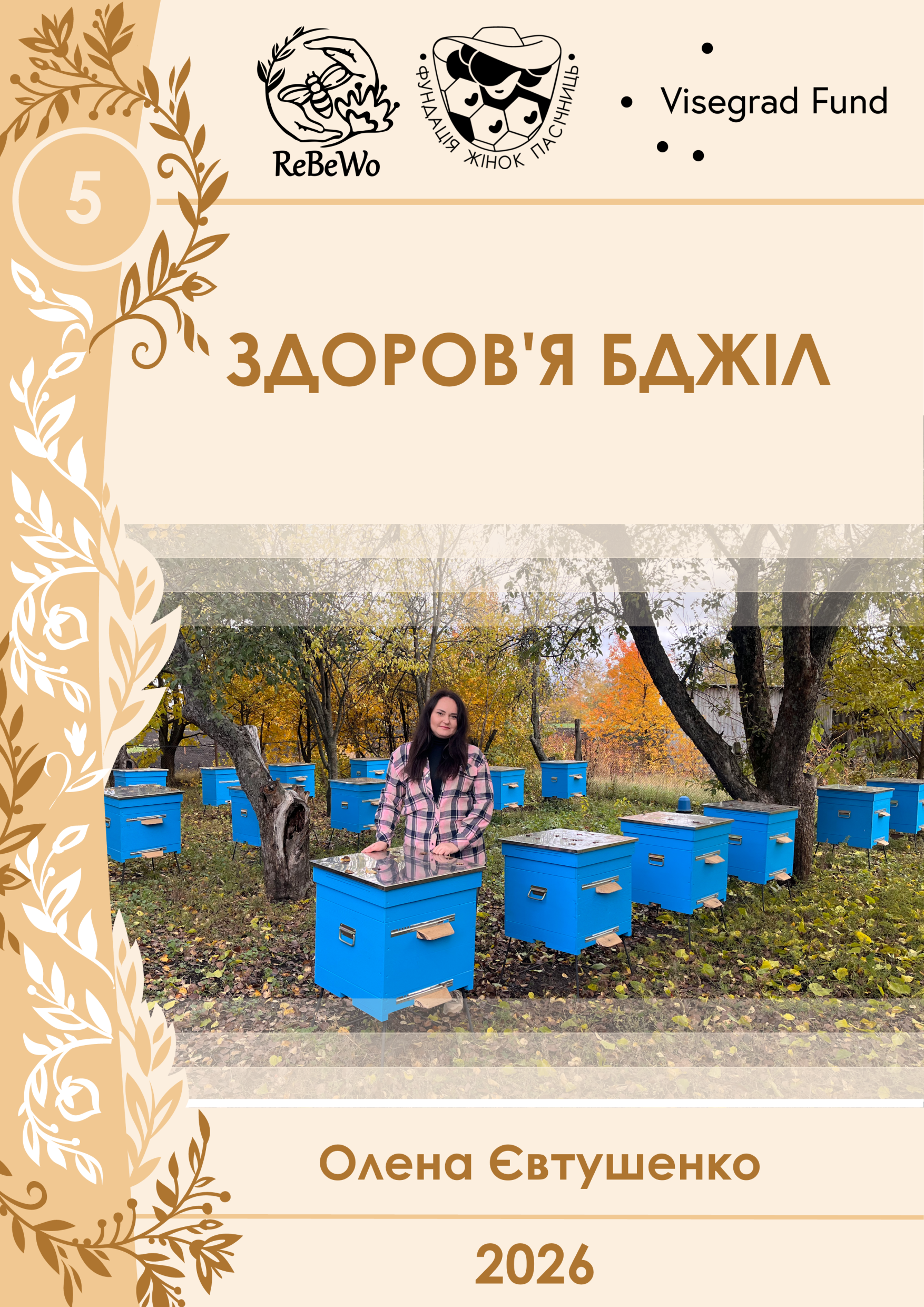
Bee Health
Keywords:
honey bee, bee colony health, varroosis, plant protection products, climate change, technogenic pressure, integrated pest management, veterinary diagnostics, safety of beekeeping products, beekeeping recoverySynopsis
The textbook “Bee Health” is part of a specialized course implemented within a pilot model of an educational system aimed at restoring beekeeping in war-affected regions of Ukraine, under the ReBeWo project (ID 22510217), with financial support from the International Visegrad Fund. The textbook presents a comprehensive approach to honey bee colony health under current conditions in Ukraine, where traditional diseases are compounded by pesticide exposure, anthropogenic pollution, climate change, and the consequences of the full-scale war. It demonstrates that the condition of honey bees is associated not only with veterinary aspects but also with food safety, the resilience of agroecosystems, the economic stability of communities, and biodiversity restoration. The publication systematizes current knowledge on the immunity of Apis mellifera, diseases and pathological conditions, the role of the gut microbiome, the quality of forage resources, and environmental stress factors. Particular attention is paid to bacterial diseases of brood and adult bees, varroosis, microsporidiosis, as well as viral and fungal infections. Emerging invasive threats are also addressed, including Tropilaelaps mites, the small hive beetle (Aethina tumida), and the Asian hornet (Vespa velutina). The importance of locally adapted bee populations and selective breeding for resistance as key tools for long-term risk reduction is emphasized. Modern approaches to clinical and laboratory diagnostics are described in detail. The textbook provides information on standardized colony inspection, field indicators of colony condition, molecular genetic methods, pathogen monitoring, and resistance of Varroa destructor to acaricides. Principles of integrated pest management, rational use of veterinary medicinal products, organic acids, and essential oils are presented, taking into account regulatory requirements for residues in bee products. The risks of multifactorial stress (a combination of mite infestations, pesticides, nutritional imbalances, and climatic anomalies) and their effects on overwintering, productivity, and colony viability are outlined. Practical algorithms for monitoring, treatment decision-making, and the selection of preventive strategies for both stationary and migratory apiaries are provided. An important component of the textbook is guidance on organizing monitoring of colony losses during wartime and post-war periods. Separate sections are devoted to the education and training of veterinarians and beekeepers, the role of women in beekeeping, the development of modern diagnostic services, and the use of digital tools for record-keeping, risk mapping, and remote consulting. The publication is intended for beekeepers, veterinary professionals, students, and all stakeholders involved in the recovery and sustainable development of beekeeping and agroecosystems in Ukraine, and it may serve as a methodological basis for educational programs, training sessions, and practical courses in bee health management.